Perspective is the tool that lets you fake three-dimensional depth on a flat 2D surface. For a game artist working in pixel art, vector art, or 3D-rendered sprites, perspective decisions shape the entire feel of a level — flat and static, dynamic and dramatic, or vast and overwhelming.
The three classic perspective systems are: one-point, two-point, and three-point.
One-Point Perspective
“Because it’s rare to have a scene where objects are perfectly aligned to the picture plane, 1-point perspective mostly serves as a starting exercise. The predominance of vertical and horizontal lines with 1-point perspective also makes the scene appear static.”
— Chris Solarski, Drawing Basics and Video Game Art (2012, p. 23)
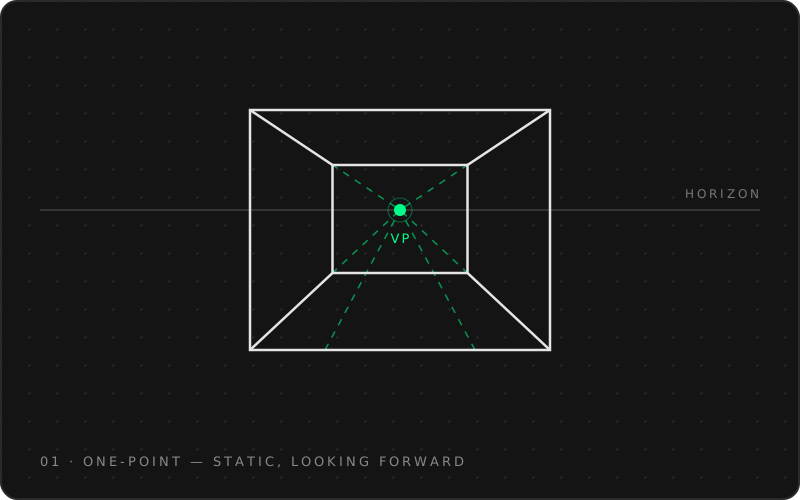
One vanishing point, usually centered on the horizon. All depth lines converge to that point; verticals stay vertical, horizontals stay horizontal. The result is calm, symmetric, often slightly artificial — perfect for endless-corridor shots or shrine reveals where you want the player looking forward.
Game use cases:
- Tunnel sequences (Half-Life corridor moments)
- Symmetric throne rooms or boss arenas
- 2.5D platformers where the player runs along a single depth axis
Two-Point Perspective
“The diagonal lines that go with 2-point perspective more accurately represent how we tend to view objects in reality. The predominance of diagonal lines gives the scene a dynamic effect, which serves most general purposes.”
— Chris Solarski, Drawing Basics and Video Game Art (2012, p. 23)
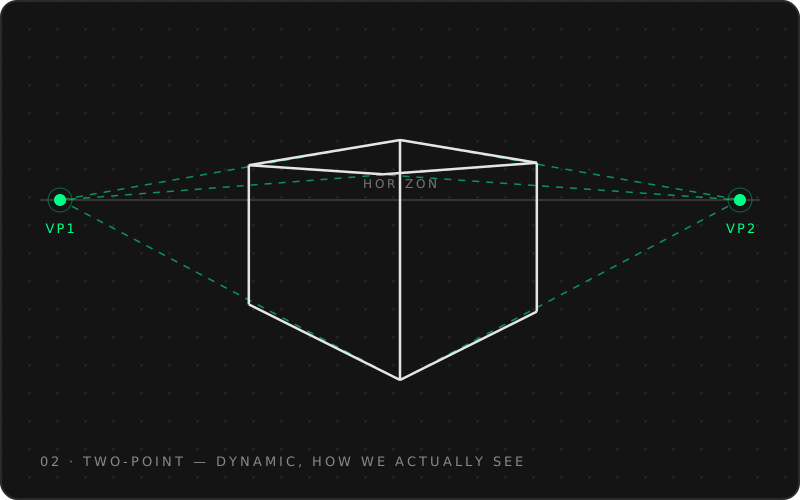
Two vanishing points on the horizon, one left and one right. Most environment art you see in games is two-point — it mimics how we actually look at objects from an angle, and the diagonals create movement without overwhelming the viewer.
Game use cases:
- Most isometric and oblique games (Stardew Valley, Bastion, Hades)
- Concept art for buildings, interiors, props
- Default for environment thumbnails
Three-Point Perspective
“3-point perspective should only be used if you want to communicate a sense of great scale, because each additional vanishing point increases the complexity of the drawing. Drawing is difficult enough as it is, so keep things simple whenever possible.”
— Chris Solarski, Drawing Basics and Video Game Art (2012, p. 23)
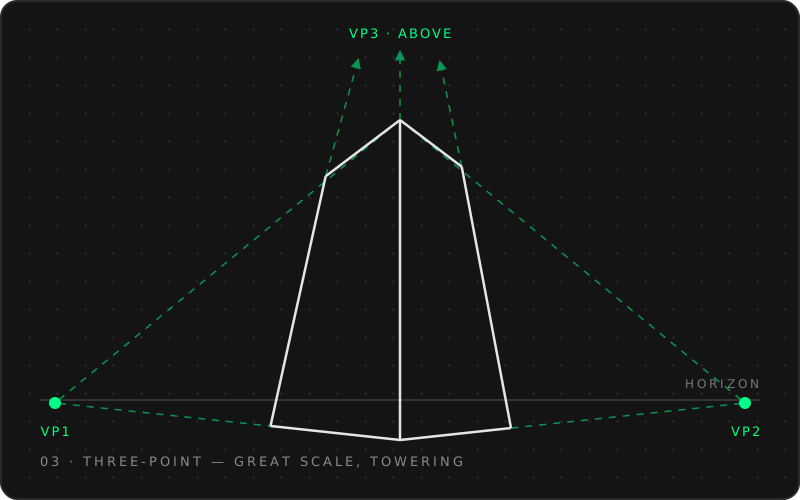
Three vanishing points — two on the horizon plus one above (worm’s-eye view, looking up) or below (bird’s-eye view, looking down). The extra vanishing point bends verticals, exaggerating scale dramatically. Hard to draw, but it’s the difference between “tall building” and “towering colossus”.
Game use cases:
- Hero shots of giants, bosses, mechs
- Drop-into-the-pit moments
- Sky-temple reveals where the player feels small
Up next: Basic Forms — before perspective comes the lump of clay: dot, square, triangle.